Traduction automatique
·
Afficher la description originale en anglais
Masquer la description originale en anglais
Description originale en anglais
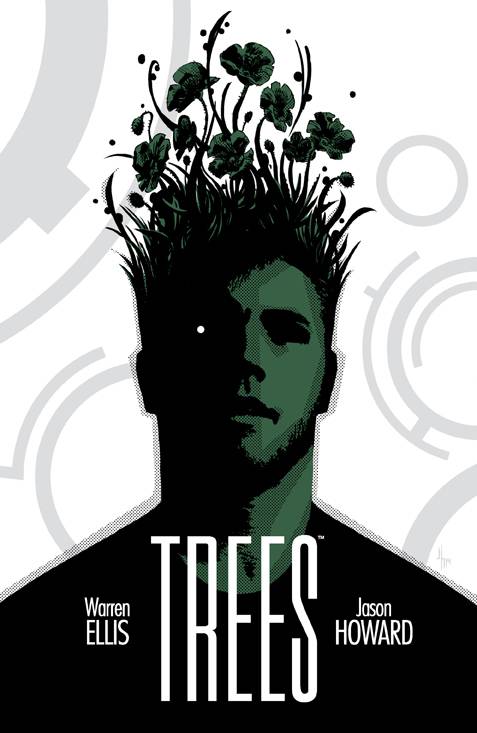
Ten years after they landed. All over the world. And they did nothing, standing on the surface of the Earth like trees, exerting their silent pressure on the world, as if there were no-one here and nothing under foot. Ten years since we learned that there is intelligent life in the universe, but that they did not recognize us as intelligent or alive. TREES, a new science fiction novel by WARREN ELLIS (Transmetropolitan, Red) and JASON HOWARD (SUPER DINOSAUR, ASTOUNDING WOLF-MAN), looks at a near-future world where life goes on in the shadows of the Trees: in China, where a young painter arrives in the "special cultural zone" of a city under a Tree; in Italy, where a young woman under the menacing protection of a fascist gang meets an old man who wants to teach her terrible skills; and in Svalbard, where a research team is discovering, by accident, that the Trees may not be dormant after all, and the awful threat they truly represent.
Dix ans après leur arrivée. Partout dans le monde. Et ils n’ont rien fait, dressés à la surface de la Terre comme des arbres, exerçant leur pression silencieuse sur le monde, comme s’il n’y avait personne ici et rien sous leurs pieds. Dix ans depuis que nous avons appris qu’il existe une vie intelligente dans l’univers, mais qu’eux ne nous reconnaissaient ni comme intelligents ni comme vivants. TREES, un nouveau roman de science-fiction de WARREN ELLIS (Transmetropolitan, Red) et JASON HOWARD (SUPER DINOSAUR, ASTOUNDING WOLF-MAN), nous plonge dans un futur proche où la vie continue dans l’ombre des Trees : en Chine, où une jeune peintre arrive dans la « zone culturelle spéciale » d’une ville dominée par un Tree ; en Italie, où une jeune femme, sous la protection menaçante d’un gang fasciste, rencontre un vieil homme qui veut lui enseigner de terribles compétences ; et au Svalbard, où une équipe de recherche découvre par accident que les Trees ne sont peut-être pas si inactifs que ça, ainsi que l’horrible menace qu’ils représentent réellement.