Traduction automatique
·
Afficher la description originale en anglais
Masquer la description originale en anglais
Description originale en anglais
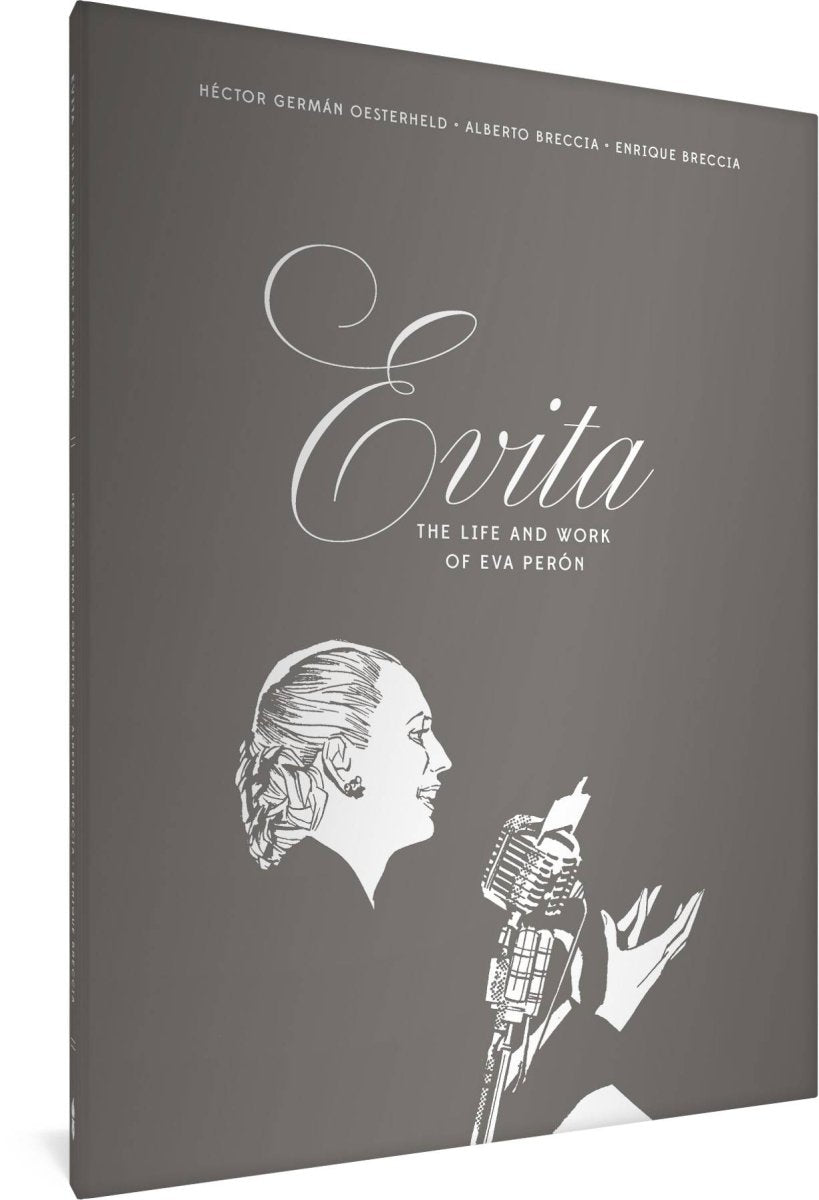
In a sequel to their spellbinding, experimental biography of Che Guevara, Hector Germán
Oesterheld and the Breccias chronicle the eventful life of Eva Perón. Published in 1970, Evita: The Life and Work of Eva Perón was daringly intended to be the follow-up to the artists' successful and controversial 1969 graphic biography Life of Che. Hector Germán Oesterheld plotted the book and the father and son team of Alberto and Enrique Breccia drew the comic - but the text was "sanitized" before its publication. In 2001, a restored version of Evita featuring Oesterheld's original, uncensored script wasfinally published in Spanish; it is translated in English here for the first time. In just 72 boldly penned chiaroscuro pages, this graphic biography paints a complex portrait of a pivotal Argentine figure who was at once beloved and reviled by her people. Born in rural Argentina to extreme poverty, she moved to Buenos
Aires where she met and married Colonel Perón, who would become president of Argentina. As First Lady, affectionately nicknamed Evita, she devoted herself to social welfare and worker's rights, campaigned for women's suffrage, and became known as "The Spiritual Leader of the Nation." While she has been viewed as an international icon, inspiring celebratory works such as Andrew Lloyd Webber's 1976Broadway Evita, this biography by her countrymen takes a far more searing and critical approach, chronicling the noble causes she fought for as well as the militarism and oppression of the Perónist regime.
Dans la suite de leur biographie expérimentale et envoûtante de Che Guevara, Hector Germán
Oesterheld et les Breccia retracent la vie mouvementée d’Eva Perón. Publié en 1970, Evita: The Life and Work of Eva Perón devait audacieusement servir de prolongement au succès aussi retentissant que controversé de leur biographie graphique de 1969, Life of Che. Hector Germán Oesterheld en a conçu le scénario, et le duo père-fils Alberto et Enrique Breccia a dessiné la BD — mais le texte a été « assaini » avant sa publication. En 2001, une version restaurée d’Evita, avec le script original non censuré d’Oesterheld, a enfin été publiée en espagnol ; elle est ici traduite en anglais pour la première fois. En seulement 72 pages au clair-obscur puissamment encré, cette biographie graphique dresse le portrait complexe d’une figure majeure de l’Argentine, à la fois adorée et détestée par son peuple. Née dans une extrême pauvreté dans l’Argentine rurale, elle part pour Buenos
Aires, où elle rencontre et épouse le colonel Perón, futur président de l’Argentine. Devenue Première dame, affectueusement surnommée Evita, elle se consacre à l’aide sociale et aux droits des travailleurs, milite pour le droit de vote des femmes et gagne le surnom de « guide spirituel de la Nation ». Si elle a été perçue comme une icône internationale, inspirant des œuvres célébrées comme le Evita de Broadway d’Andrew Lloyd Webber en 1976, cette biographie écrite par des compatriotes adopte une approche bien plus incisive et critique, retraçant autant les causes nobles qu’elle a défendues que le militarisme et l’oppression du régime péroniste.