
Traduction automatique
·
Afficher la description originale en anglais
Masquer la description originale en anglais
Description originale en anglais
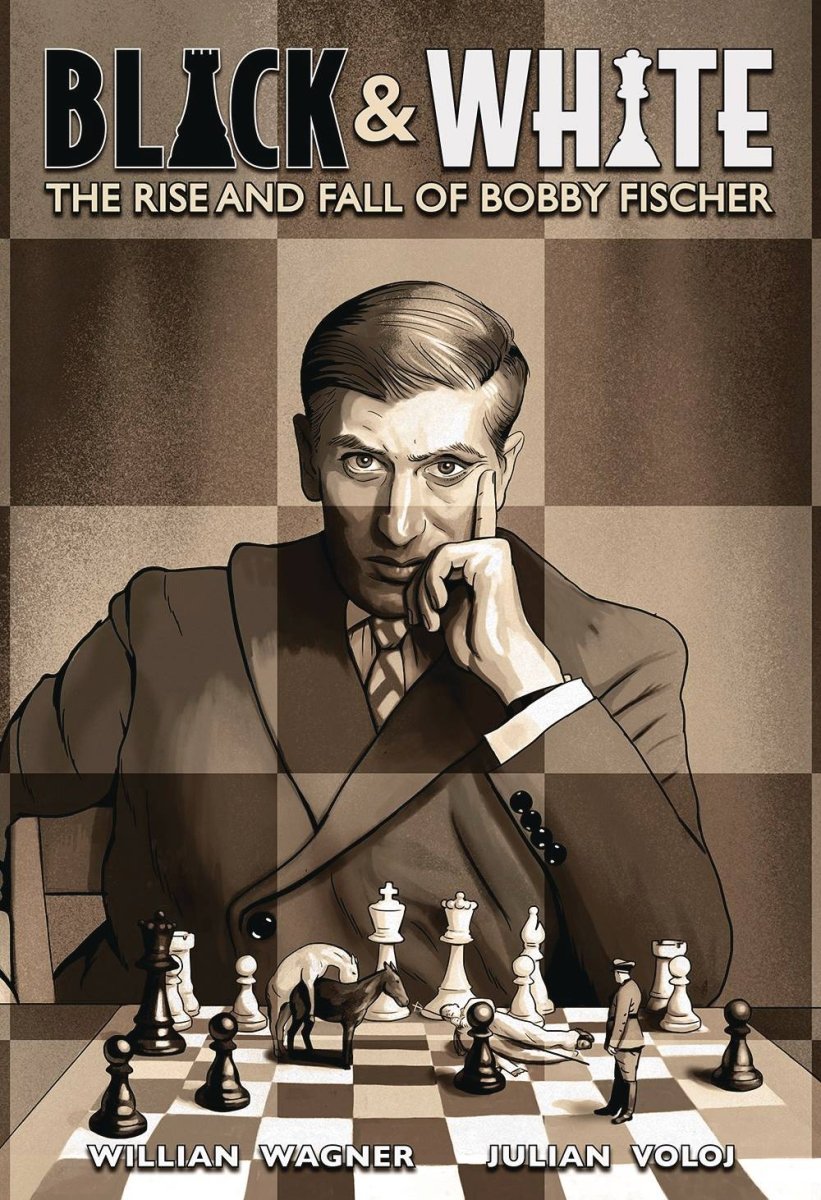
The life of Bobby Fischer (1943-2008) had many unexpected moves-from his solitary childhood to his stratospheric accomplishments in the world of competitive chess, and eventually, his decent into mental illness and disgrace. By the time Fischer was a teen, he had established himself as a loner and dropped out of school. But none of that mattered; he had found his true calling-chess. In 1972, Fischer played what many consider "the game of the century" against the Soviet Union's chess champion Boris Spassky at the height of the Cold War. Later, Fischer became the youngest-ever US Chess Champion and the game's youngest grandmaster. Never before had chess received such international attention. Fischer, whose sole focus in life up until then was chess, reached the Olympus of chess at 29, and then... he disappeared. Suffering from mental illness, the chess genius became increasingly paranoid, lost in anti-Semitic conspiracy theories-despite the fact that he himself was Jewish-and died as a fugitive in Iceland. With Black & White, author Julian Voloj and illustrator Wagner Willian have crafted a beautiful and fascinating work that reveals Fischer's history while also contextualizing his lasting impact on culture.
La vie de Bobby Fischer (1943-2008) a connu bien des coups inattendus, de son enfance solitaire à ses accomplissements stratosphériques dans l’univers des échecs de compétition, jusqu’à sa descente dans la maladie mentale et la disgrâce. Adolescent, Fischer s’était déjà imposé comme un solitaire et avait quitté l’école. Mais rien de tout cela n’avait d’importance : il avait trouvé sa véritable vocation, les échecs. En 1972, Fischer disputa ce que beaucoup considèrent comme « la partie du siècle » contre le champion d’échecs soviétique Boris Spassky, au plus fort de la guerre froide. Par la suite, Fischer devint le plus jeune champion des États-Unis d’échecs de l’histoire ainsi que le plus jeune grand maître du jeu. Jamais auparavant les échecs n’avaient attiré une telle attention internationale. Fischer, dont les échecs avaient jusque-là été l’unique centre d’intérêt, atteignit l’Olympe des échecs à 29 ans, puis… il disparut. Atteint de troubles mentaux, le génie des échecs devint de plus en plus paranoïaque, se perdant dans des théories complotistes antisémites — malgré le fait qu’il était lui-même juif — avant de mourir en fugitif en Islande. Avec Black & White, l’auteur Julian Voloj et l’illustrateur Wagner Willian signent une œuvre belle et fascinante qui retrace l’histoire de Fischer tout en replaçant son impact durable sur la culture dans son contexte.