Traduction automatique
·
Afficher la description originale en anglais
Masquer la description originale en anglais
Description originale en anglais
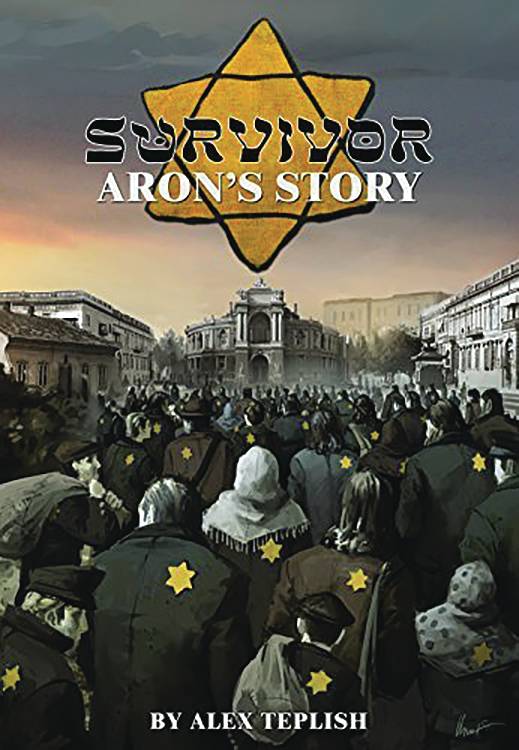
Aron considered himself a typical Jewish-Soviet boy, getting along with his Russian and Ukrainian neighbors while growing up in multi-cultural Odessa of the 1930s. Life didn't come easy to his Yiddish and Russian-speaking family, but they got by, assimilated to their surroundings. As the 40s approached, Nazi Germany began its march across Europe, with the extermination of the Jewish people as one of its aims. Allied with Romania, the Nazis now set their sights on the Soviet Union, fighting the Red Army for territory while committing mass atrocities against the Jews and other people they deemed "unfit for life". Living through the Odessa Massacre, Aron, his two brothers, sister, and parents were expelled from their home city, struggling to survive the Holocaust perpetrated by the German and Romanian Army along with their local collaborators.
The first part of this book shares Aron's experience of living in Odessa, Ukraine (part of the former USSR) and his survival as a teenager under the Romanian/Nazi occupation during WWII. Aron's story, visually depicted here in the graphic novel form, allows us to experience the events first hand, through the eyes of young Aron himself, while learning about one of the least documented episodes of the Holocaust. The second part of the book delves deeper into the history of the Jewish Diaspora, connecting this historical background to the roots of Jewish persecution, World War II, and the Holocaust.
Many of the events from Aron's life presented in this book have been translated from his interview to the Shoah Foundation, founded by Steven Spielberg.
Aron se considérait comme un garçon judéo-soviétique tout ce qu’il y a de plus ordinaire, en bonne entente avec ses voisins russes et ukrainiens pendant son enfance dans l’Odessa multiculturelle des années 1930. La vie n’était pas facile pour sa famille parlant yiddish et russe, mais elle s’en sortait en s’assimilant à son environnement. À l’approche des années 40, l’Allemagne nazie entama sa marche à travers l’Europe, avec parmi ses objectifs l’extermination du peuple juif. Alliés à la Roumanie, les nazis tournèrent alors leur attention vers l’Union soviétique, affrontant l’Armée rouge pour le contrôle des territoires tout en commettant des atrocités de masse contre les Juifs et d’autres personnes qu’ils jugeaient « indignes de vivre ». Après avoir survécu au massacre d’Odessa, Aron, ses deux frères, sa sœur et ses parents furent expulsés de leur ville natale et luttèrent pour survivre à l’Holocauste perpétré par les armées allemande et roumaine avec l’aide de leurs collaborateurs locaux.
La première partie de ce livre raconte l’expérience d’Aron à Odessa, en Ukraine (alors partie de l’ex-URSS), ainsi que sa survie à l’adolescence sous l’occupation roumaine et nazie pendant la Seconde Guerre mondiale. Son histoire, mise en images ici sous forme de roman graphique, nous permet de vivre les événements au plus près, à travers les yeux du jeune Aron lui-même, tout en découvrant l’un des épisodes les moins documentés de l’Holocauste. La seconde partie du livre explore plus en profondeur l’histoire de la diaspora juive, en reliant ce contexte historique aux racines des persécutions antijuives, de la Seconde Guerre mondiale et de l’Holocauste.
Une grande partie des événements de la vie d’Aron présentés dans ce livre a été adaptée à partir de son entretien pour la Shoah Foundation, fondée par Steven Spielberg.