Traduction automatique
·
Afficher la description originale en anglais
Masquer la description originale en anglais
Description originale en anglais
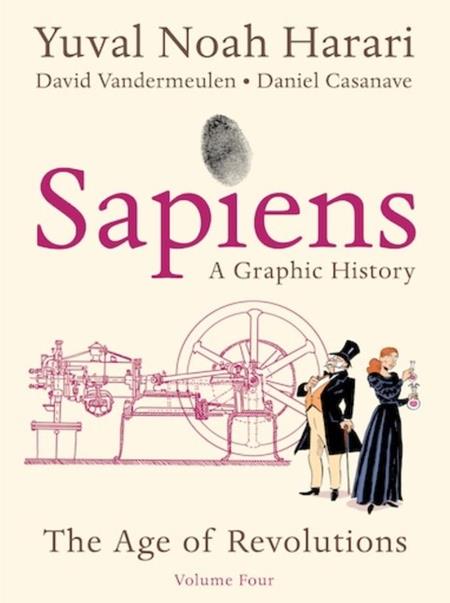
Until 1500 AD, Homo sapiens were mostly satisfied with the medical, military, and economic powers they had achieved, preferring to spend their resources on preserving the existing social order, not breaking new ground. So, how did we go from medieval scrolls to modern computers? From the Santa Maria to the atomic bomb? From the earth’s surface to the moon? Turns out the key to jumpstarting the Scientific Revolution was one major discovery: ignorance. Admitting our ignorance led the pursuit of new knowledge, kicking off an endless cycle spurred by science, politics, and economics—a feedback loop that has brought us to the brink of a new sort of intelligence that might just supersede humanity as we know it.Volume 4 maps onto Part 4 of the original Sapiens book, and examines how a shift toward scientific thinking transformed human history starting in the 16th century and continuing into the future. This is when science overtook religion and philosophy as the dominant way of understanding the world—fueling imperialism, the Industrial Revolution, and the unraveling of old social structures. This volume also looks ahead, asking how breakthroughs like artificial intelligence might transform human consciousness and the future of our species.This final installment in the Sapiens: A Graphic History series delivers on the previous three installments, with an engaging, insightful, and colorful retelling of the story of humankind for curious minds of all ages. Once again, Yuval Noah Harari, David Vandermeulen, and Daniel Casanave present the complicated story of humankind with wit, empathy, and originality. The final volume can be browsed through on its own or read in sequence with Volumes One, Two, and Three.
Language: English
Page Count: 256
Size (in inches): 8.1 x 10.9
Creator(s): Yuval Noah Harari, David Vandermeulen, Daniel Casanave
On-Sale Date: November 4, 2026
Jusqu’en 1500 apr. J.-C., Homo sapiens se contentait globalement des pouvoirs médicaux, militaires et économiques qu’il avait acquis, préférant consacrer ses ressources à préserver l’ordre social existant plutôt qu’à ouvrir de nouvelles voies. Alors, comment est-on passé des rouleaux médiévaux aux ordinateurs modernes ? De la Santa Maria à la bombe atomique ? De la surface de la Terre à la Lune ? En réalité, la clé qui a lancé la Révolution scientifique tient à une découverte majeure : l’ignorance. En admettant notre ignorance, nous avons ouvert la voie à la quête de nouvelles connaissances, déclenchant un cycle sans fin alimenté par la science, la politique et l’économie — une boucle de rétroaction qui nous a menés au bord d’une nouvelle forme d’intelligence qui pourrait bien dépasser l’humanité telle que nous la connaissons. Le Volume 4 correspond à la Partie 4 du livre original Sapiens et montre comment un basculement vers la pensée scientifique a transformé l’histoire humaine à partir du XVIe siècle et jusqu’à l’avenir. C’est à ce moment-là que la science a supplanté la religion et la philosophie comme principale manière de comprendre le monde — alimentant l’impérialisme, la Révolution industrielle et l’effondrement des anciennes structures sociales. Ce volume se tourne aussi vers l’avenir et s’interroge sur la manière dont des percées comme l’intelligence artificielle pourraient transformer la conscience humaine et l’avenir de notre espèce. Ce dernier tome de la série Sapiens: A Graphic History est à la hauteur des trois précédents, avec une relecture captivante, pertinente et haute en couleur de l’histoire de l’humanité pour les esprits curieux de tous âges. Une fois de plus, Yuval Noah Harari, David Vandermeulen et Daniel Casanave racontent l’histoire complexe de l’humanité avec esprit, empathie et originalité. Ce volume final peut se feuilleter indépendamment ou se lire à la suite des Volumes One, Two et Three.
Langue : anglais
Nombre de pages : 256
Format (en pouces) : 8.1 x 10.9
Créateur(s) : Yuval Noah Harari, David Vandermeulen, Daniel Casanave
Date de sortie : 4 novembre 2026