Traducción automática
·
Ver la versión original en inglés
Ocultar la versión original en inglés
Versión original en inglés
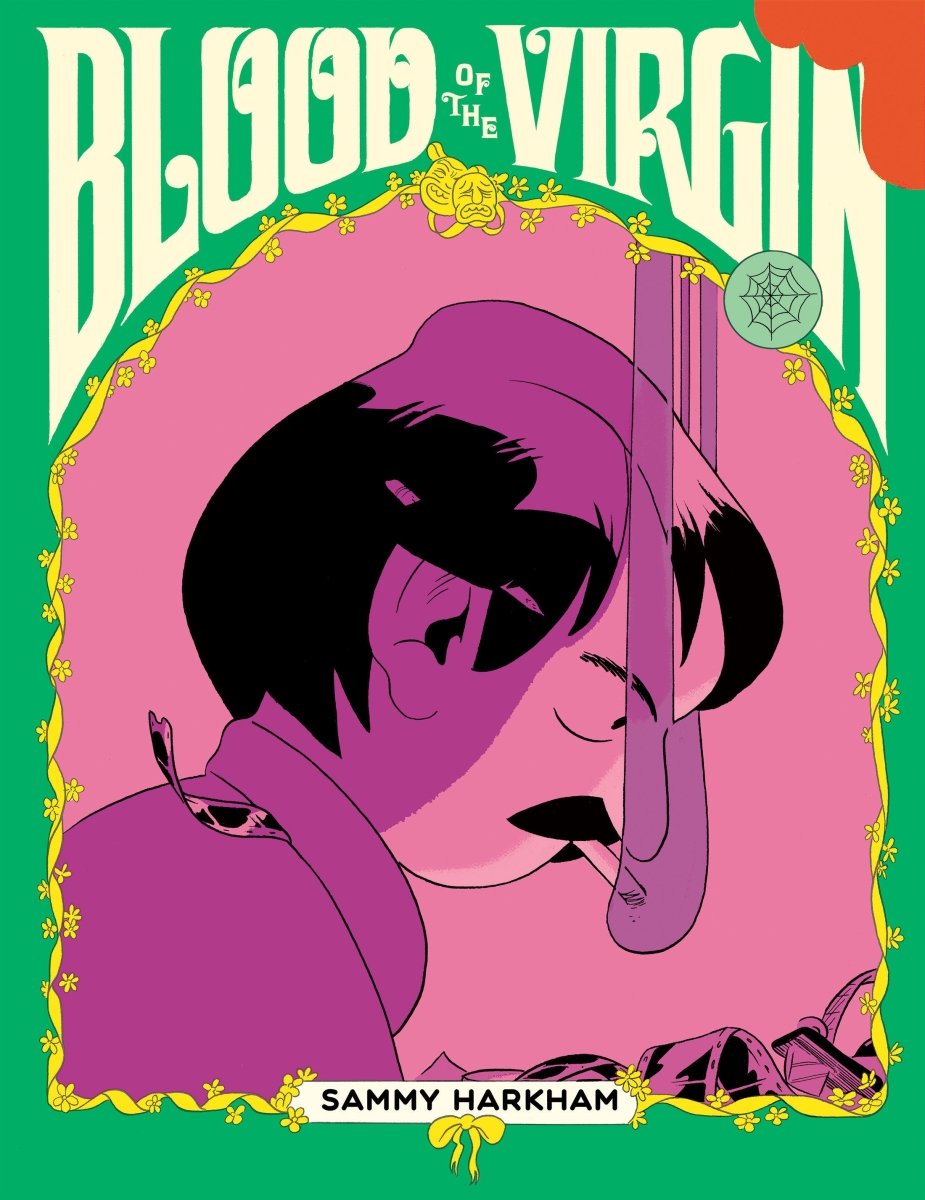
“A story about storytelling...Conjures up the grindhouse movie-making scene in 1970s Los Angeles and tracks an ambitious young man’s flailing attempts to build a family and a career as a film arteest in that debased world...A book with a lot of heart.” —Art Spiegelman, bestselling author of MAUSFourteen years in the making, renowned and beloved graphic novelist Sammy Harkham finally delivers his epic story of artistic ambition, the heartbreak it can bring, and what it means to be humanYOU CAN BURN IN HELL Set primarily in Los Angeles in 1971, Blood of the Virgin is the story of twenty‑seven‑year‑old Seymour, an Iraqi Jewish immigrant film editor who works for an exploitation film production company. Sammy Harkham brings us into the underbelly of Los Angeles during a crucial evolutionary moment in the industry from the last wheeze of the studio system to the rise of independent filmmaking. Seymour, his wife, and their new baby struggle as he tries to make it in the movie business, writing screenplays on spec and pining for the chance to direct. When his boss buys one of his scripts for a project called Blood of the Virgin and gives Seymour the chance to direct it, what follows is a surreal, tragicomic making-of journey. As Seymour’s blind ambition propels the movie, his home life grows increasingly fraught. The film’s production becomes a means to spiral out into time and space, resulting in an epic graphic novel that explores the intersection of twentieth‑century America, parenthood, sex, the immigrant experience, the dawn of early Hollywood, and, shockingly, the Holocaust. Like a cosmic kaleidoscope, Blood of the Virgin shifts and evolves with each panel, widening its context as the story unfolds, building an intricate web of dreams and heartbreak, allowing the reader to zoom in to the novel’s core: the bittersweet cost of coming into one’s own.
“Una historia sobre contar historias... Evoca la escena del cine grindhouse en el Los Ángeles de los años 70 y sigue los torpes intentos de un joven ambicioso por construirse una familia y una carrera como artiste del cine en ese mundo degradado... Un libro con mucho corazón.” —Art Spiegelman, autor superventas de MAUSCatorce años en preparación, el reconocido y querido novelista gráfico Sammy Harkham por fin nos entrega su épica historia sobre la ambición artística, el desamor que puede traer y lo que significa ser humanoPUEDES ARDER EN EL INFIERNO Ambientada principalmente en Los Ángeles en 1971, Blood of the Virgin cuenta la historia de Seymour, un montador de cine judío iraquí de veintisiete años que trabaja para una productora de películas de explotación. Sammy Harkham nos lleva al lado más sórdido de Los Ángeles durante un momento clave de transformación en la industria, desde el último suspiro del sistema de estudios hasta el auge del cine independiente. Seymour, su esposa y su bebé recién nacido lidian con las dificultades mientras él intenta abrirse camino en el mundo del cine, escribiendo guiones por encargo y soñando con la oportunidad de dirigir. Cuando su jefe compra uno de sus guiones para un proyecto llamado Blood of the Virgin y le da a Seymour la oportunidad de dirigirlo, lo que sigue es un surrealista y tragicómico viaje por el proceso de rodaje. A medida que la ambición ciega de Seymour impulsa la película, su vida familiar se vuelve cada vez más tensa. La producción del filme se convierte en una vía para desbordarse a través del tiempo y el espacio, dando como resultado una novela gráfica épica que explora la intersección entre la América del siglo XX, la paternidad, el sexo, la experiencia inmigrante, los albores del Hollywood primitivo y, de forma impactante, el Holocausto. Como un caleidoscopio cósmico, Blood of the Virgin cambia y evoluciona con cada viñeta, ampliando su contexto a medida que se desarrolla la historia, tejiendo una intrincada red de sueños y desamor, y permitiendo al lector acercarse al corazón de la novela: el agridulce precio de encontrarse a uno mismo.