Traducción automática
·
Ver la versión original en inglés
Ocultar la versión original en inglés
Versión original en inglés
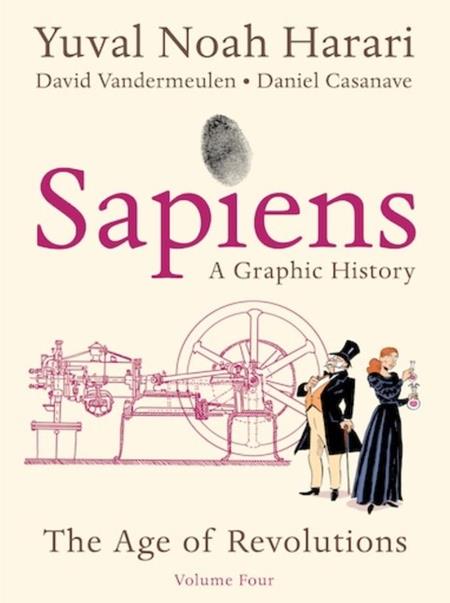
Until 1500 AD, Homo sapiens were mostly satisfied with the medical, military, and economic powers they had achieved, preferring to spend their resources on preserving the existing social order, not breaking new ground. So, how did we go from medieval scrolls to modern computers? From the Santa Maria to the atomic bomb? From the earth’s surface to the moon? Turns out the key to jumpstarting the Scientific Revolution was one major discovery: ignorance. Admitting our ignorance led the pursuit of new knowledge, kicking off an endless cycle spurred by science, politics, and economics—a feedback loop that has brought us to the brink of a new sort of intelligence that might just supersede humanity as we know it.Volume 4 maps onto Part 4 of the original Sapiens book, and examines how a shift toward scientific thinking transformed human history starting in the 16th century and continuing into the future. This is when science overtook religion and philosophy as the dominant way of understanding the world—fueling imperialism, the Industrial Revolution, and the unraveling of old social structures. This volume also looks ahead, asking how breakthroughs like artificial intelligence might transform human consciousness and the future of our species.This final installment in the Sapiens: A Graphic History series delivers on the previous three installments, with an engaging, insightful, and colorful retelling of the story of humankind for curious minds of all ages. Once again, Yuval Noah Harari, David Vandermeulen, and Daniel Casanave present the complicated story of humankind with wit, empathy, and originality. The final volume can be browsed through on its own or read in sequence with Volumes One, Two, and Three.
Language: English
Page Count: 256
Size (in inches): 8.1 x 10.9
Creator(s): Yuval Noah Harari, David Vandermeulen, Daniel Casanave
On-Sale Date: November 4, 2026
Hasta el año 1500 d. C., el Homo sapiens estaba en general bastante satisfecho con los poderes médicos, militares y económicos que había alcanzado, y prefería dedicar sus recursos a preservar el orden social existente en lugar de abrir nuevos caminos. Entonces, ¿cómo pasamos de los pergaminos medievales a los ordenadores modernos? ¿De la Santa Maria a la bomba atómica? ¿De la superficie de la Tierra a la Luna? Resulta que la clave para poner en marcha la Revolución Científica fue un gran descubrimiento: la ignorancia. Admitir nuestra ignorancia impulsó la búsqueda de nuevos conocimientos y puso en marcha un ciclo sin fin alimentado por la ciencia, la política y la economía: un bucle de retroalimentación que nos ha llevado al borde de un nuevo tipo de inteligencia que podría incluso superar a la humanidad tal y como la conocemos. El Volumen 4 se corresponde con la Parte 4 del libro original Sapiens y examina cómo un giro hacia el pensamiento científico transformó la historia humana a partir del siglo XVI y hasta el futuro. Fue entonces cuando la ciencia superó a la religión y a la filosofía como la forma dominante de entender el mundo, alimentando el imperialismo, la Revolución Industrial y el desmoronamiento de las viejas estructuras sociales. Este volumen también mira hacia adelante y plantea cómo avances como la inteligencia artificial podrían transformar la conciencia humana y el futuro de nuestra especie. Esta entrega final de la serie Sapiens: A Graphic History está a la altura de las tres anteriores, con una reinterpretación atractiva, lúcida y colorida de la historia de la humanidad para mentes curiosas de todas las edades. Una vez más, Yuval Noah Harari, David Vandermeulen y Daniel Casanave presentan la compleja historia de la humanidad con ingenio, empatía y originalidad. Este volumen final puede disfrutarse por sí solo o leerse en orden junto con los Volúmenes One, Two y Three.
Idioma: Inglés
Número de páginas: 256
Tamaño (en pulgadas): 8.1 x 10.9
Creador(es): Yuval Noah Harari, David Vandermeulen, Daniel Casanave
Fecha de lanzamiento: 4 de noviembre de 2026