Traducción automática
·
Ver la versión original en inglés
Ocultar la versión original en inglés
Versión original en inglés
In a sequel to their spellbinding, experimental biography of Che Guevara, Hector Germán
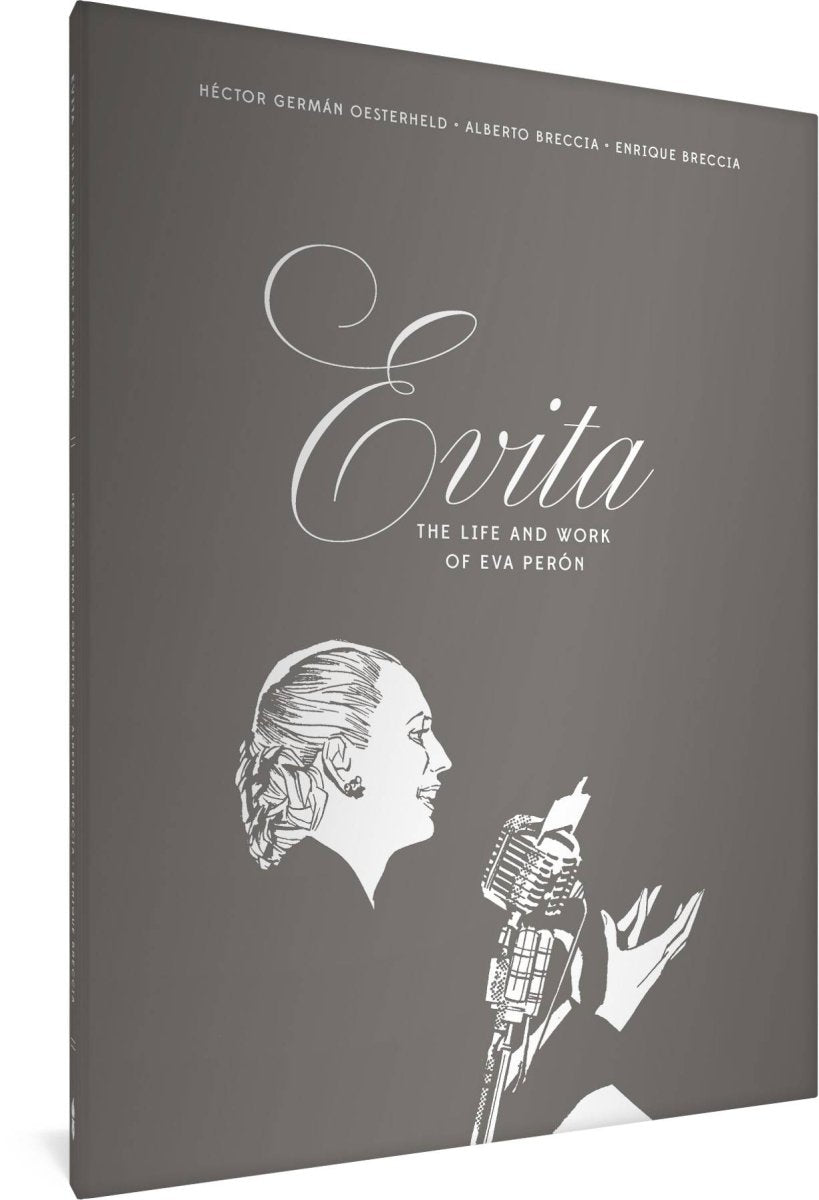
Oesterheld and the Breccias chronicle the eventful life of Eva Perón. Published in 1970, Evita: The Life and Work of Eva Perón was daringly intended to be the follow-up to the artists' successful and controversial 1969 graphic biography Life of Che. Hector Germán Oesterheld plotted the book and the father and son team of Alberto and Enrique Breccia drew the comic - but the text was "sanitized" before its publication. In 2001, a restored version of Evita featuring Oesterheld's original, uncensored script wasfinally published in Spanish; it is translated in English here for the first time. In just 72 boldly penned chiaroscuro pages, this graphic biography paints a complex portrait of a pivotal Argentine figure who was at once beloved and reviled by her people. Born in rural Argentina to extreme poverty, she moved to Buenos
Aires where she met and married Colonel Perón, who would become president of Argentina. As First Lady, affectionately nicknamed Evita, she devoted herself to social welfare and worker's rights, campaigned for women's suffrage, and became known as "The Spiritual Leader of the Nation." While she has been viewed as an international icon, inspiring celebratory works such as Andrew Lloyd Webber's 1976Broadway Evita, this biography by her countrymen takes a far more searing and critical approach, chronicling the noble causes she fought for as well as the militarism and oppression of the Perónist regime.
En una secuela de su hipnótica y experimental biografía de Che Guevara, Hector Germán
Oesterheld y los Breccia narran la agitada vida de Eva Perón. Publicada en 1970, Evita: The Life and Work of Eva Perón fue concebida con audacia como la continuación de la exitosa y controvertida biografía gráfica de 1969, Life of Che. Hector Germán Oesterheld ideó el libro y el dúo padre e hijo formado por Alberto y Enrique Breccia dibujó el cómic, pero el texto fue "depurado" antes de su publicación. En 2001 por fin se publicó en español una versión restaurada de Evita con el guion original y sin censura de Oesterheld; aquí se traduce al inglés por primera vez. En apenas 72 páginas de marcado claroscuro, esta biografía gráfica traza un retrato complejo de una figura argentina clave, a la vez amada y odiada por su pueblo. Nacida en la extrema pobreza en la Argentina rural, se mudó a Buenos
Aires, donde conoció y se casó con el coronel Perón, que se convertiría en presidente de Argentina. Como primera dama, conocida cariñosamente como Evita, se dedicó al bienestar social y a los derechos de los trabajadores, hizo campaña por el sufragio femenino y llegó a ser conocida como "La Líder Espiritual de la Nación". Aunque ha sido vista como un icono internacional e inspiró obras celebratorias como la Evita de Broadway de Andrew Lloyd Webber en 1976, esta biografía escrita por sus compatriotas adopta un enfoque mucho más incisivo y crítico, y relata tanto las nobles causas por las que luchó como el militarismo y la opresión del régimen peronista.