
I often think about violence.
Not in a way that you might think, where I want to go punch a wall. Just in a casual way, where we look at the world around us and all the ways in which violence affects us, as well as what people would consider violent and (more grimly) what they would not. I think it’s an interesting topic to explore in media, and what better medium for it than comics? They are so drenched in people fighting each other and solving all their problems through fists that sometimes taking a step back from it all can be seen as bland or boring.

Sorry, I think I went a little too introspective while writing this newsletter after seeing the books I picked to recommend from October Preos. I guess sometimes we have to critically examine our media, right? Well, here’s some reading material on how violence has been approached in comics over the years…
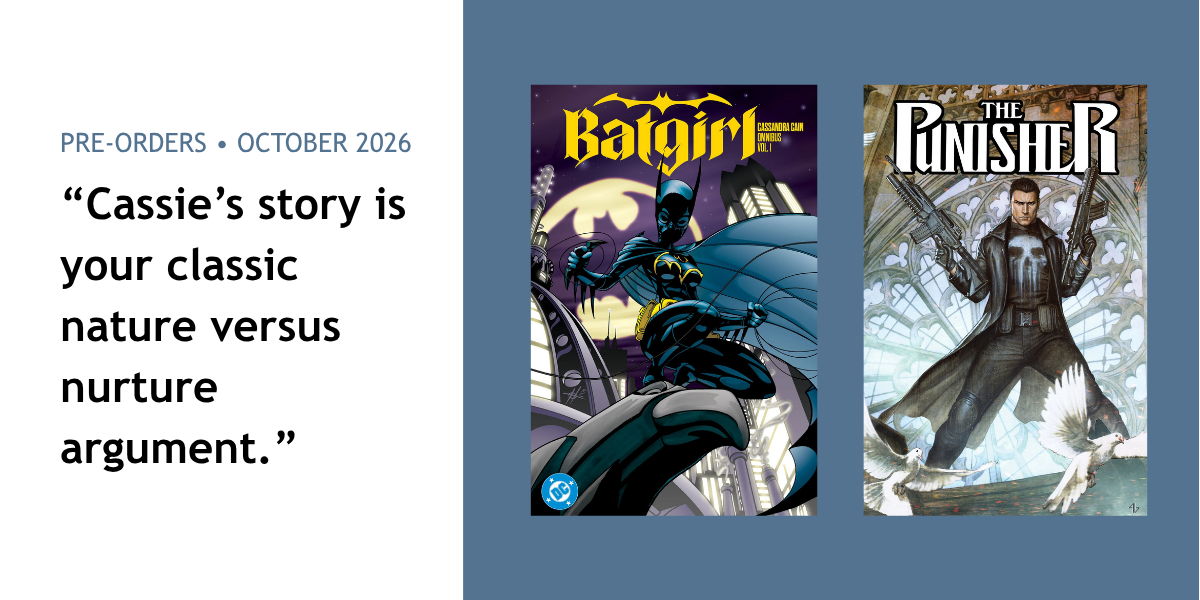
Punisher: Enter The War Zone Omnibus
Greg Rucka has quickly climbed to the top of the list of my favorite comic book writers. I’m a simple enough man, and I love some grounded takes on costumed characters, so everything this man writes is just my cup of tea, from Batman and Wonder Woman (his Rebirth omnibus just got released!) through Gotham Central and 52 to X-Men, Daredevil and, finally, Punisher.
Really, has there ever been a better match for this man in the Marvel echelon than Frank Castle? Rucka tackles Punisher’s war against “The Exchange,” a military crime syndicate, while also exploring the idea of the “Punisher” and introducing compelling new characters like the memorable Rachel Cole-Alves.
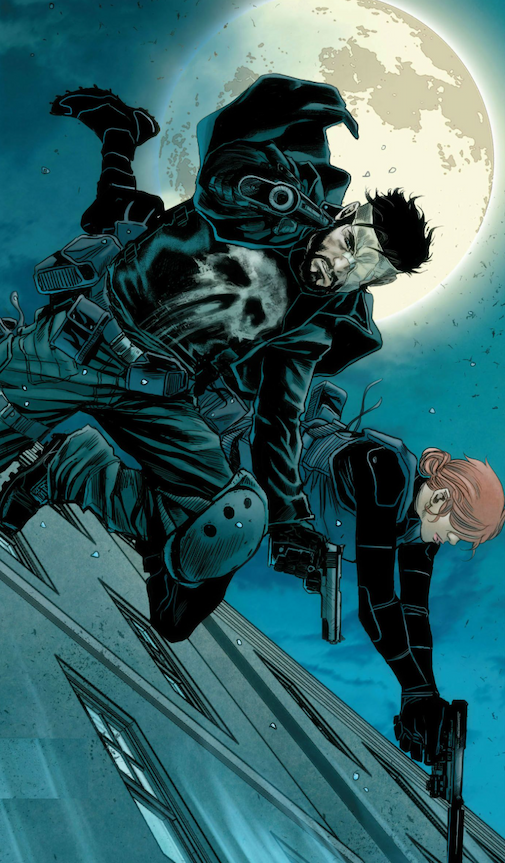
If you were worried that Frank would be too introspective here, fear not! Rucka establishes him as a force of nature, deadly and terrifying. Meanwhile, he anchors the emotional beats in Rachel. It’s an exploration of trauma and the cost of vengeance, and it poses the question at the core of the Punisher: what is the difference between a soldier and a serial killer?
And of course, there’s Marco Checchetto’s artwork. If you read his Daredevil with Zdarsky, then you know the spectacle that waits for you in these pages too. Any street-level superhero he touches turns into a spectacle. His Frank is rugged yet practical, while the action is crisp and kinetic. This is the best modern take on the Punisher, and I know I will be getting it (even though I’m not a Punisher reader, this book gets a definite “yes, please” from me!).

![Punisher: Enter The War Zone Omnibus Adi Granov Cover HC [DM Only] *PRE-ORDER*](https://cdn.shopify.com/s/files/1/0403/3514/7159/files/9781302970949.jpg?v=1787570358)
Batgirl: Cassandra Cain Omnibus Vol 1
I’ll be honest, I usually try to editorialize myself for your reading pleasure, but I’m just too excited for this one!!! I LOVE Cassandra Cain, and when the first DC Finest: Batgirl came out, I was beyond ecstatic. We were finally getting Cassie stories collected! And then this omnibus was announced, and boy oh boy!
So, for those unaware, here’s a quick origin of Cassie Cain. She was raised by her father, David Cain, in complete isolation, deprived of speech and touch, and trained to communicate with body language and violence. Introduced in the No Man’s Land event, she saves Jim Gordon’s life and is rewarded with the mantle of Batgirl by Bruce and Barbara, as well as a newfound family.
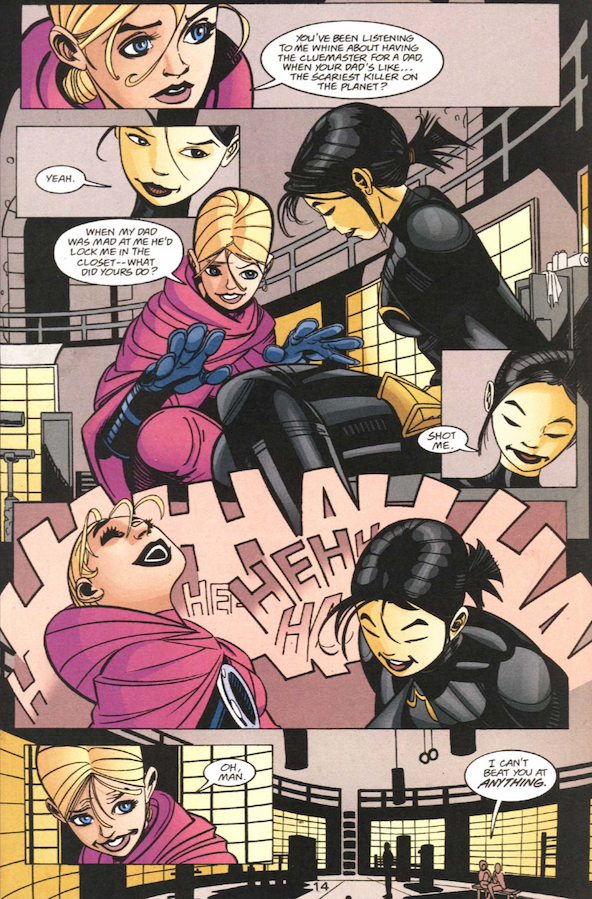
Cassie’s story is your classic nature versus nurture argument. She was raised to be a deadly weapon, and she spends her new life unlearning this programming. This is what Kelley Puckett, Joe Kelly, and Scott Peterson delve deeply into, exploring this new Batgirl and developing her from scratch. It’s a story about communication and legacy. Cassie initially cannot speak and lives her life in restraint. Overcoming this means dealing with her childhood trauma and the burden of expectations through a heartbreaking journey.
Damion Scott had a tough job with the art, carrying a huge narrative load due to the mute protagonist. The anatomy is often exaggerated to express the impact Cassandra’s martial arts training has on her worldview. At the same time, the art is very stylized and often reminds me of graffiti art with how energetic and urban it feels. Through it, we get a window into how Cassie sees the world. This book is a masterclass in visual storytelling and character development, and a perfect origin for one of DC’s most compelling heroes.

Teenage Mutant Ninja Turtles: Urban Legends Omnibus
I mean… What can I say? It’s a Big Book Newsletter. You expected no Turtles? Now, hear me out. If you know anything about the Turtles, you will know this run is infamous. It’s a non-canon Image Comics outing that changed the Turtles’ status quo in INSANE ways: Leo loses a hand, Raph loses an eye, then dons Shredder’s armor to take over the Foot Clan, Donnie becomes a cyborg and Splinter becomes a giant bat… and you wonder why Peter Laird just skipped over this when continuing the series 😅
However, what I like about this book is that it’s such a prime example of ’90s extremism. It’s dark and bloody for no reason other than to be dark and bloody. However, Gary Carlson does explore the themes of mutilation and physical consequence through it all… as much as the ’90s allowed it. It’s an interesting venture into what holds the brothers together when literally everything they have, the sewers, the status quo, even their bodies, is gone.
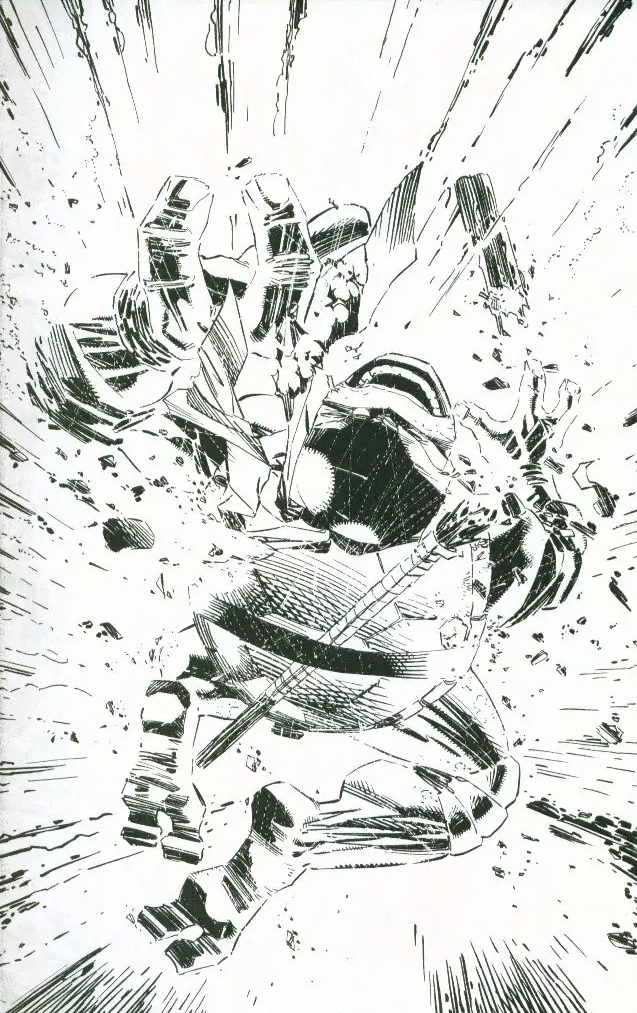
And then there’s Frank Fosco on the art. This is probably what will make or break the book for you, so I highly encourage you to check out some panels before grabbing it! Fosco’s art is pure, raw ’90s. It’s heavily inked and aggressively unapologetic. To me, it evokes the original Mirage Studios run, but there is an excessiveness to the period that lets it stand on its own, even as the black (and white) sheep of the family. I, for one, cannot wait to go through these stories and go through my edgy Big Books Guy phase.

And there you have it…
…quite a lot of violent books this month, eh? There are many others, less (or more!) violent, e.g., Deadpool and Conan, waiting for you on this page:
As we rev up for the slower months, I hope you have a good Halloween. Got any good superhero costumes planned?
Cheers!
