Once More for the People in the Back


Vertigo is by far the biggest name-drop in the comics world. Whenever you hear it invoked, an editor or writer is usually trying to signal two things: my book is creator-centric, and my book is damn good. Quality and authorship are heavy burdens for a brand to acquire, and even heavier ones to maintain. Vertigo was about as definitive as a comics imprint could get. It formed readers’ tastes and gave artists a space to showcase their craft at the highest possible level. If simply mentioning the name still carries value, then putting that name on a cover carries something even greater: a loud, screaming promise. Anything less than impactful risks feeling like a failure.
Only DC Comics, though, can do more than evoke Vertigo in passing. It is the only publisher that can put the beast back into the match (which is also how I imagine Shakespeare would describe Pokémon). And that is exactly what DC has done. Brought back Vertigo, I mean. Not Shakespeare’s Pokémon. Well, it has done it more than once. DC briefly revived and rebranded Vertigo in 2018, promising a new generation of ambitious, creator-owned comics under Executive Editor Mark Doyle. One year later, the publisher announced that the imprint would be pushed back into the grave as part of a simplified, more immediately legible publishing structure built around DC Black Label. Vertigo was officially sunset at the end of 2019.
This time, however, DC says it is serious. The return was announced at New York Comic Con in October 2024, with Executive Editor Chris Conroy overseeing Vertigo as the home of DC’s creator-owned comics, graphic novels and collected editions. A full slate followed in October 2025, with the first books arriving in February 2026.
The logic behind the revival feels almost comically simple: look at all the brilliant creators already making books for DC and ask whether they have any cool ideas of their own. Deniz Camp can write Absolute Martian Manhunter for the company while creating Assorted Crisis Events somewhere else. Why keep allowing those original ideas to cross the street to the Image Comics side of town? DC has a name sitting in its back pocket that helped form the writing tastes of many of these creators in the first place. It might as well use it.
But why does that particular name carry so much weight?
So, What Was Vertigo?
During the 1980s, editor Karen Berger became responsible for a strange collection of increasingly sophisticated comics that did not behave much like the rest of the publisher’s superhero line. Working with creators including Alan Moore, Neil Gaiman, Grant Morrison, Jamie Delano and Peter Milligan, Berger helped cultivate stories that drew from horror, mythology, politics, literature and counterculture. They could feature characters owned by DC, but they were not particularly interested in behaving like conventional DC comics.

By the beginning of the 1990s, titles such as Swamp Thing, The Sandman, Hellblazer, Animal Man, Doom Patrol and Shade, the Changing Man had already developed a shared sensibility. They were intelligent without being ashamed of their pulp origins, literary without ceasing to be visual and adult without treating violence or profanity as substitutes for maturity. In January 1993, DC gave that sensibility an official home. Vertigo was born under Berger’s direction.
The imprint also arrived at exactly the right cultural moment. In 1993, the American direct market was deep in a superhero frenzy. Over time, Vertigo helped make long-form, creator-led comics easier to discover outside the traditional monthly-comics audience. Its series were collected into volumes that remained available in bookstores and libraries, allowing readers to encounter them as complete works rather than as whichever issue happened to be on the shelf that Wednesday. It became a gateway into comics for people who did not consider themselves superhero readers and sometimes did not yet consider themselves comics readers at all. Wired described the imprint, on its twentieth anniversary, as a home for mature storytelling and independent material that expanded far beyond capes and tights.
Most importantly, Vertigo created taste. Entire generations learned from its catalogue what a comic could look like, how long a story could take to unfold and how personal genre fiction could become. Future writers absorbed those lessons, future artists saw the imprint as a place where unusual visual approaches would be taken seriously, and future editors chased the almost mythical idea of discovering “the next Vertigo.”
That is why its return generated excitement even among readers who could not name every series the imprint ever published. Older readers remember what the logo once guaranteed. Newer readers have spent years hearing creators cite it as the place that changed their understanding of the medium. Vertigo’s reputation survived its closure because it had become larger than a functioning publishing line. It became shorthand for a particular creative ideal.
Now DC has put that shorthand back on new comics.
Our top 10 favourite classic Vertigo comics:
10. The Invisibles

Written by Grant Morrison and drawn by an evolving army of artists led by Steve Yeowell, The Invisibles follows a countercultural resistance cell fighting an authoritarian conspiracy that controls reality itself. Across three volumes, it mixed anarchism, occultism, alien invasions, pop culture and enough philosophical concepts to permanently alter the brain chemistry of an entire generation of comic writers.
Read the mentioned books
The Invisibles reading options
Swipe sideways to browse the books.
9. Shade, The Changing Man

Peter Milligan and Chris Bachalo took Steve Ditko’s obscure science-fiction hero and turned him into the centre of a psychedelic trip through an America infected by its own collective madness. Beginning before Vertigo officially existed and joining the imprint with issue #33, Shade helped establish the emotional, hallucinatory language that would come to define it.
Read the mentioned books
Shade, The Changing Man reading options
Swipe sideways to browse the books.
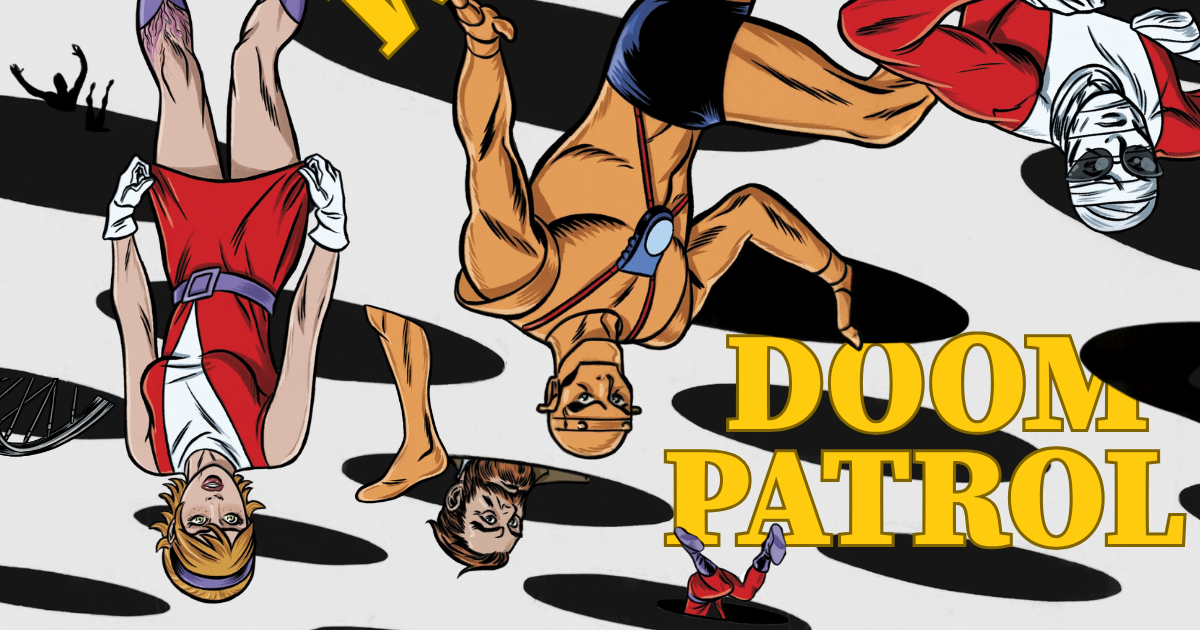
8. Doom Patrol

Grant Morrison and Richard Case transformed DC’s struggling super-team into a congregation of damaged people facing paintings that eat cities, philosophical secret societies and villains who consider normality an act of aggression. Morrison’s run ended one issue before Doom Patrol officially joined Vertigo under Rachel Pollack, but its surrealism, emotional vulnerability and complete disregard for conventional superhero logic helped create the imprint’s language before the logo even existed.
Read the mentioned books
Doom Patrol reading options
Swipe sideways to browse the books.
7. Daytripper

Created by Brazilian twins Fábio Moon and Gabriel Bá, Daytripper follows obituary writer Brás de Oliva Domingos through different moments in his life, with every chapter ending in his death. The ten-issue series won the 2011 Eisner Award for Best Limited Series.
Read the mentioned books
Daytripper reading options
Swipe sideways to browse the books.
6. Fables

Bill Willingham, Mark Buckingham and their collaborators relocated characters from folklore and fairy tales to a hidden community in New York after they were driven from their homelands. What began as a clever murder mystery expanded into one of Vertigo’s defining long-form fantasies, reaching 150 issues in its original run before returning for a final twelve-issue continuation.
Read the mentioned books
Fables reading options
Swipe sideways to browse the books.
5. Preacher

Garth Ennis and Steve Dillon’s Preacher follows Jesse Custer, a faithless Texas minister bonded with a supernatural force, as he crosses America looking for God and demanding an explanation for why He abandoned Creation. Across 66 issues and several specials, it became one of the most notorious and celebrated comics of the 1990s, attacking religion, patriotism and good taste with equal enthusiasm.
Read the mentioned books
Preacher reading options
Swipe sideways to browse the books.
4. Y: The Last Man

Brian K. Vaughan and Pia Guerra begin with one of the sharpest elevator pitches in comics: a mysterious event kills every mammal with a Y chromosome except for amateur escape artist Yorick Brown and his pet monkey, Ampersand. What follows is a globe-spanning thriller about gender, politics and survival that earned the 2008 Eisner Award for Best Continuing Series and helped define Vertigo’s hugely successful 2000s era.
Read the mentioned books
Y: The Last Man reading options
Swipe sideways to browse the books.
3. Hellblazer

Beginning with Jamie Delano and John Ridgway before passing through creators including Garth Ennis, Steve Dillon, Mike Carey, Marcelo Frusin, Peter Milligan and many more, Hellblazer followed working-class occultist John Constantine for 300 issues. It became Vertigo’s longest-running original title and established Constantine as the patron saint of winning supernatural battles while losing absolutely everything else.
Read the mentioned books
Hellblazer reading options
Swipe sideways to browse the books.
2. Lucifer

Spinning out of Neil Gaiman’s The Sandman, Mike Carey and Peter Gross’s Lucifer follows the former ruler of Hell after he abandons his throne and attempts to create a universe beyond God’s authority. Across 75 issues, Carey transformed a magnetic supporting character into the centre of a vast theological epic about free will, responsibility, creation and the terrifying consequences of getting exactly what you asked for.
Read the mentioned books
Lucifer reading options
Swipe sideways to browse the books.
1. The Sandman
Neil Gaiman and artists including Sam Kieth, Mike Dringenberg, Jill Thompson, Marc Hempel, Michael Zulli and many others built The Sandman around Dream of the Endless, an immortal embodiment of stories forced to confront a universe that changed during his imprisonment. Its original 75-issue run became the definitive Vertigo title, crossed decisively into literary culture and produced “A Midsummer Night’s Dream,” the first comic to win a World Fantasy Award for short fiction.
Read the mentioned books
The Sandman reading options
Swipe sideways to browse the books.
THE NEW CLASS OF 2026
The Nice House by the Sea

James Tynion IV, Álvaro Martínez Bueno and Jordie Bellaire continue their apocalyptic horror saga under a shiny new brand. One of the best comics of the decade earned the honour of carrying the Vertigo label through pure, undeniable quality.
The story circles a mysterious figure called Walter (no relation to our Walt, we think) and the group of friends he invites to an impossibly beautiful house. What begins as a weekend getaway becomes a life sentence when they discover that their holiday home is actually an ark, and they may be among humanity’s last survivors. The Nice House by the Sea expands that nightmare by introducing a second house filled not with Walter’s favourite people, but with the brightest and most competitive humans another member of his species could find. The two groups were both told they were the only survivors. Naturally, that lie does wonders for neighbourly relations.
Tynion masters the genre through a carefully controlled unravelling that keeps building, folding back on itself and revealing that every answer contains another locked room. He captures his generation’s fears and misgivings while reclaiming its faults as evidence that these people, and perhaps people generally, might still mean something. Martínez Bueno and Bellaire make the end of the world beautiful, enticing and hypnotic. This book hits like a house fire inside your head, and you will not be able to put it out.
Read the mentioned books
The Nice House reading options
Swipe sideways to browse the books.
Bleeding Hearts


Deniz Camp, Stipan Morian and Matt Hollingsworth introduce Poke, a zombie whose heart unexpectedly begins beating again in a society where being truly alive may make him the ultimate outsider. Ten years after humanity’s defeat, zombies have developed their own language, rituals and social order; Poke is perfectly comfortable inside it until compassion starts making the humans around him look less like food and more like people.
This is a zombie story like no other, and Camp makes an increasingly convincing case for his place among the all-time greats. Instead of reheating the political nachos comics have been serving since Watchmen, he looks directly at today’s world with a clever and genuinely spiritual eye. Other stories are still warning that our screens will turn us into zombies. Bleeding Hearts understands that ship has sailed, sunk and been repurposed as content. The more interesting question is whether a heart can begin beating again after we have grown hilariously, tragically comfortable being dead.
Read the mentioned books
Bleeding Hearts reading options
Swipe sideways to browse the books.
End of Life


Kyle Starks, Steve Pugh and Chris O’Halloran follow elite hitman Eddie Stallion, who accidentally crosses a senior figure in the international assassin cabal known as the Menagerie. With a death sentence hanging over him, Eddie hides in the one place nobody expects him to return: the small Midwestern town occupied by his estranged, cancer-stricken father, his first love and practically every unresolved feeling he has spent his adult life shooting around.
For anyone missing the particular edginess that Vertigo leads once provided, Eddie Stallion is the John Constantine of our age of terminal idiosyncrasy. End of Life is funny to the bone, but its silliness never makes it uncertain about its objectives. Beneath the ridiculous assassins and small-town criminals is a confrontation with fatherhood, mortality and all the places we never looked back at because looking forward was easier.
Read the mentioned books
End of Life reading options
Swipe sideways to browse the books.
The Peril of the Brutal Dark: An Ezra Cain Mystery


Chris Condon and Jacob Phillips send private investigator Ezra Cain into a noir conspiracy involving fascists, magic and a stolen artefact powerful enough to change the world. Its starting point sits close to the crime-noir terrain that Jacob’s father, Sean Phillips, and Ed Brubaker built an empire out of with Criminal, Reckless and their many excellent cousins. Jacob does not simply photocopy the family business, though. His heavy shadows and lived-in faces establish the language of noir, only for the comic to begin speaking in magical tongues. What looks like a gumshoe mystery steadily acquires the adventurous momentum of Indiana Jones, where every clue leads not only deeper into the case but further away from the rational world.
Read the mentioned books
Ezra Cain reading options
Swipe sideways to browse the books.
100 Bullets: The US of Anger

Brian Azzarello and Eduardo Risso return to the world of 100 Bullets as Lono arrives back in America and becomes a catalyst for the violence, rage and resentment already waiting beneath its surface. The original 100 Bullets began with what first appeared to be a collection of revenge stories that gradually widened into a hundred-issue conspiracy. The series became one of Vertigo’s defining crime books, earning multiple Eisner and Harvey Awards and proving that a long-form noir comic could be as structurally ambitious as anything else in the medium.
Read the mentioned books
100 Bullets reading options
Swipe sideways to browse the books.
Black Tower: The Raven Conspiracy

Ram V and Mike Perkins combine British espionage with occult fantasy as a secret band of wizard-spies attempts to prevent the theft of a giant-king’s head and the collapse of an ancient magical defence. The pitch immediately recalls Apple TV’s Slow Horses, adapted from Mick Herron’s Slough House novels: an apparently second-rate intelligence department filled with discarded agents who may be far more useful than the respectable professionals upstairs. Only here, the disgraced spies carry spells alongside their silencers, and the international intelligence war involves sorcerers, giant remains and magical infrastructure. It is less “Tinker Tailor Soldier Spy” and more “Tinker Tailor Necromancer Spy.”
What comes next:
Necretaceous
Tom Taylor and Darick Robertson
Zombies, dinosaurs and catastrophic time travel.
Fanatic
Grace Ellis and Hannah Templer
Comic fandom curdles into murderous obsession.
The Crying Doll
Mariko Tamaki and Rosemary Valero-O’Connell
Best friendship meets possible serial murder.
A Walking Shadow
Simon Spurrier and Aaron Campbell
Eight strangers. One boat. No memories.